

Randy Ingermanson is a theoretical-physicist-turned-author who uses the same left-brain logic from his first career to organize his right-brain’s creativity when writing a novel. He is famously known for his novel structuring process called the Snowflake Method.
I find the method to be interesting and helpful, but the actual article expounding it a bit long-winded (approx. 3,500 words in length). I felt it would have been nice to have more of a bird’s-eye-view of the process.
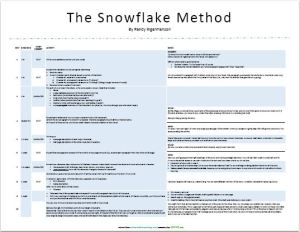
So I decided to create a summary of it myself. Or rather, summaries. They are basically brief overviews of the same article just organized/presented in different ways (because I feel it helps in creating multiple neural connections). Feel free to check them out here: Snowflake Method Summaries & print out any you prefer.
Description of Each Summary


posts in series:
- Part 1: Writing Method: Snowflake by Randy Ingermanson (Printable Summaries)
- Part 2: Writing Method: 7-Point System by Dan Wells (Printable Summaries)
- Part 3: Writing Method: Writing into the Dark (Pantsers) by Dean Wesley Smith
- Part 4: Writing Method: Making a Mess by Me 🙂
- Part 5: Writing Method: 3 Act/9 Block/27 Chapter Outline by Kat O’Keeffe (Printable Summaries)
- Part 6: Writing Method: Plot Structure by Jenna Moreci (Printable Worksheets)
Directly Related Post:

Why the Snowflake Method Works for Fantasy (and Why It Sometimes Doesn’t)
The Snowflake Method, developed by Randy Ingermanson, is often recommended to fantasy writers—and for good reason. Fantasy is complex by nature. Big worlds, layered magic systems, multiple POVs, long arcs. The Snowflake Method offers something many fantasy writers quietly crave: a way to build all of that without drowning in it. But it’s not a…

Mailing List
For notes on books, MasterClasses, writing & finance, click here to get notified when new posts go live on GWUWI.com






 Green Where You Water It
Leave a comment