

If you’re a part-time writer or write as a hobby, it’s pretty easy not to spend time writing. Especially since your livelihood doesn’t depend on it. You might even feel guilty doing it. After all, it’s something you do for yourself that’s just for fun. You don’t really need to do it.
To that I’d say, everyone needs an outlet. Something to balance you out. If writing is something you do for fun, invest in it. Treat it like a game that you pick up from time to time to unwind.
Or, if on the other hand you’re like me, then maybe you tend to let your critical side take the wheel (as it usually does) and drive a story you’re working on straight into a wall. Which makes writing not so fun. No beuno. When all you do is think about everything that could go wrong with the story, it doesn’t really make you want to approach it anymore.
Thinking about the logic of a story is necessary. But there’s a time and a place. When you’re first drafting (as I suspect you’re gearing up to do during Preptober), now’s not the time nor the place for it. If you’re writing for fun, it should actually be fun. One way to ensure that is to isolate the creation from the editing phase.
Both sides of your creativity (i.e., the dreamer and the editor) should have their turn to go down the water slide. For me, this is what helps the dreamer play and the editor well-behaved and waiting his turn:
1. Choose the right app/tool
Seems basic, but can do a lot to add to your word count if you’re not being held back by the equipment you use.
Neil Gaiman uses fountain pens and two different colors he alternates on a daily basis to give him a visual of how much progress he made on a given day.
But he’s a professional writer who’s life is dedicated to writing. For a hobbyist, you might be more interested in writing just whenever you’re in the mood. And possibly in between your daily life & tasks.
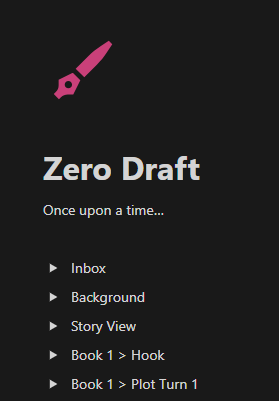
For me, more than anything, I need to be able to access my writing whenever and wherever. Though I like writing by hand, I prefer computers just because the logical side of my brain always picks at the fact that I’ll have to transcribe onto a computer anyway, I should save myself some time and write it in there to begin with. So in order for me to stop the chatter, I write on a computer. I have the usual trajectory as anyone else: first started with Word, then moved on to Scrivener. But I also needed to access it anywhere anytime for whenever inspiration strikes. So I needed for it to be mobile-friendly. And after working on Scrivener with all its features, Google docs fell short for me. I also needed the app to work fast, be simple enough to use on my phone, but have the ability to handle complexity if required, and sync across all my devices. Notion checked all those boxes.
I’ve transferred all my stories to Notion, which enables me to draft on the go and create a writing nook that mimics a lot (albeit not all) of the features of Scrivener right on my phone. So far, I feel it’s the best app on the market for writers. I hope you try it out if you haven’t already. Might be worth it.
This is what I see on my computer:

This is what I see on my phone:

2. Write your fantasies
On first draft, forget logic.
Don’t be shy. Don’t think it’s stupid. You can fix everything later. First round should always be raw passionate unabridged fun fantasies of everything you ever wanted to have happen…happen.
Don’t think. Or worry if anything makes sense. None of it has to make sense. Write whatever comes to your mind, however preposterous it comes out sounding. Think about how compelling dreams are. Most of the time they don’t make sense. But they take you on a ride. Jump in.
3. Work through your pain, give it an ending you would’ve always wanted
Experienced a bad breakup? Going through family troubles? Conflict at work? Write it out. How it is now. How you want it to be. How you would have wanted it to end.
Harry Potter has a lot of great father figures from Dumbledore to Hagrid to Mr. Weasely. Not to mention Sirius Black. All because JK Rowling didn’t have a good father figure growing up. As a result, the entire world got wonderful examples of ideal father figures through her imagination.
Take your pain and make it into something that’s good for the world.
4. Link it to another action
I have energy issues so when I inevitably have to lie down to rest I usually use that time to read or write.
I don’t have to think about when I have to write because I know if I’m not feeling well, that’s when I grab my phone and get a few words out (or escape into my own little world).
This way, I also avoid feeling like I’m tied to a rigid structure and a set time that if missed, makes me feel like I lost my chance to get some writing done that day. Instead, any time I lie down, I write. When I’m feeling tired or right before I fall asleep at night.
5. Write what you know, square bracket the rest
Skip to what you know is going to happen. Write the scenes that come easily to you.
If you have a vague idea of something, but don’t know how it’ll work out, the dialogue, description or any details of it, summarize it in square brackets and move on. For example, [SHE DECIDED THE ONLY WAY SHE WAS GOING TO GET THE MOUSE TO TALK TO HER AGAIN WAS TO BAKE IT A CAKE AND LURE IT OUT OF ITS HIDEY HOLE. THEN MAYBE SHE CAN CONVINCE THAT HANDSOME NURSE THAT SHE DIDN’T REALLY BELONG THERE. BUT HOW WOULD SHE GET BAKING SUPPLIES? AND AN OVEN. THEY DIDN’T LIKE PATIENTS PLAYING WITH APPLIANCES.]
6. Write as if you’re watching a show
That means write fast. Describe the basics, only the most important parts, and keep the scene going. This is for those who get hyper focused on the details. If you have no issues with details, then you don’t ever have to worry about them. But if you can’t make yourself finish a story, ignore the details. (You got that part.) Focus on getting to the finish line.
7. Come back to it everyday, write 50 words
As James Clear, author of Atomic Habits says, don’t set a habit based on your best day, set a habit you can perform even on your worst days.
If you’re a gamer, it’s kind of like you coming back to the game every day to level up your skills, or stock up on characters, currency or land. With writing a little everyday, you’re stocking up on words. Quality matters and it comes with practice. Writing practice is measured by time invested or words written, plus intention.
So you can set a goal of 15 minutes of writing everyday or 50 words. Your intention could be laying the next piece of the puzzle (i.e., the story) down. Or whatever challenge you want to focus on (e.g., getting this dialogue right, hitting 10k, tracing this entire plot thread through your story in the editing phase).
Setting time/word goals and pairing it with intention is important because it allows you to track and tracking helps you spot progress. Progress fuels motivation.
8. Flip between stories, like watching a show
If you write everyday, eventually you’re going to get bored of your story. At least I do. You might start getting critical or too close to the story. (Or at least I do.) Once your logical side starts taking over for the first draft and you can’t move forward because you’re questioning everything (like me…detect a pattern?), it’s a good time to switch stories.
Most people advise against switching between stories. Usually professional writers who are working against a deadline. But if you’re writing for fun, why not switch it up?
It’s like picking a show to watch based on your mood.
It keeps you engaged, motivated and making progress on some piece of writing while you detach from the other.
One thing to note is that you might want to make each Work in Progress (WIP) distinct so plot points and events don’t get mixed up.
9. Put it aside, give yourself some distance from it
I touched on this in the last section, but to elaborate: sometimes when you don’t feel like you can find any more words or ideas for a particular story or project, then you’ve pushed it as far as you can go. Most likely you’re stuck in your head about it. Too attached to make big decisions. Too in the weeds to see the big picture.
The best thing you can do for yourself and your story at that point is to give it some breathing room. Set it aside. Everything’s in your subconscious anyway, don’t worry about it. Let your subconscious work it in the background while you move on to other things.
When you circle back to it, you’ll probably be surprised to find that you can—all of a sudden—think of new connections and make the decisions you were too afraid to make before. All because you allowed yourself some space and time to detach.
10. Write until you can’t write anymore.
This contradicts #7’s tip to write 50 words a day, but sometimes and only if you’re in the mood, it might be worthwhile to go hard. So long as it won’t burn you out the next day when you have to come back and still get that 50 words in.
But it’s doable if you allow yourself the freedom to write 50 words on any WIP.
Going hard on random days when the urge is there can help you dive deep into the story world and get a lot done in one sitting. It can produce new plot threads, help you think up unique connections, take your story down an unexpected path or uncover a new facet of a secondary character that brings them to the forefront.
Consider doing an intense writing session one day and see what you get out of it. If it’s not for you, at least you’ll know.
11. Draft, summarize using toggles
On Notion, you can use something called toggles to hide additional text or details.
Draft as much as you can draft. Once the document starts getting big enough, and you’ve started to get familiarized with certain scenes (and know them like the back of your hand), you can create a toggle, summarize the scene, and dump it into the toggle.
Open toggle:

Closed toggle:

It’s reverse outlining right within the draft itself. This way, you’ve saved space and once you’ve got enough of the scenes summarized, you can start browsing through your story at a quicker pace. If you need to delve deeper into your story after a long break away, you can always open up the toggle and read through the scene in detail.
12. Don’t read what you wrote before
Yeah this runs the risk of disjointed or choppy writing and most probably inconsistent voice and pacing, but it’ll keep up momentum. You can fix everything else later. And no, it won’t take you that long if you have a good editing strategy. (You can figure that out later too, it won’t be as hard at the drafting if you’re naturally super critical of yourself and are prone to thinking more with the logical side of your brain. You’ll shine during editing.)
If you’ve forgotten where you are when you’re drafting, just retell the story from memory and move forward from there on to the next scene you can remember, even if it’s not the next scene of the story.
You can write a line or 2 to situate it in the story. For example, “before Sarah discovers the murder weapon but after she agrees to go on a date with the serial killer, she spots the pattern of how he chooses his victims and realizes she fits the profile.”
Keep in mind you don’t have to summarize before you write the scene, you can simply write the scene and come back to it later to write that blurb, do a toggle and dump the details in. Then you would be able to move the toggle around to the right place in the story. Or you can leave rearrangements to later.
Basically, focus on writing. Everything else is secondary. If you need to plot/organize, do just enough to help you write. Don’t think or criticize or question the logic of it. Just write what you know, what you think is interesting until you get to the end of the story. Then rearrange and edit. And even when editing, start off with the big pieces and figure out the minutiae later. Details will take more time to ensure accuracy. It will take more time to line up and place just right to create the most impact. But all of that will be made much easier once the bigger pieces are in place first.
13. Read a lot, read often, read widely and wildly
Nothing helped me get the right words out more than reading. It doesn’t happen overnight, it’s going to take time. Don’t be afraid to have multiple books going at the same time. Consider reading across different genres. My TBR and currently reading lists include biographies, science, fantasy, sci fi, business books, romance, short stories, novellas, teen and adult books. Sometimes I focus on just one book until I finish it. Sometimes I switch based on my mood. But I need to spend time reading something everyday. That need was built and didn’t happen right away. I used to love reading as a kid (because I would always see my dad or big brother reading around the house and would want to do whatever they did), but then being forced to read certain books for school kind of took the fun out of it. I managed to get back into it when I realized I can read whatever I wanted and however I wanted to.
Initially it was hard to decide whether to read or write. Some days I do one or the other (and make up time or words for the missed task the next day). Some days I do both. But I always try to at least keep up one side of it (i.e., either read or write). I consider reading a part of writing. Once you start seeing the impact it has on levelling up your skills, I hope you will too.
What are some tricks that have helped you draft? Or keep up with your stories throughout the year (especially while juggling other responsibilities like school or work)?
if you like it, put a pin on it!
Mailing List
Stay updated on new posts.


 Green Where You Water It
Leave a comment