
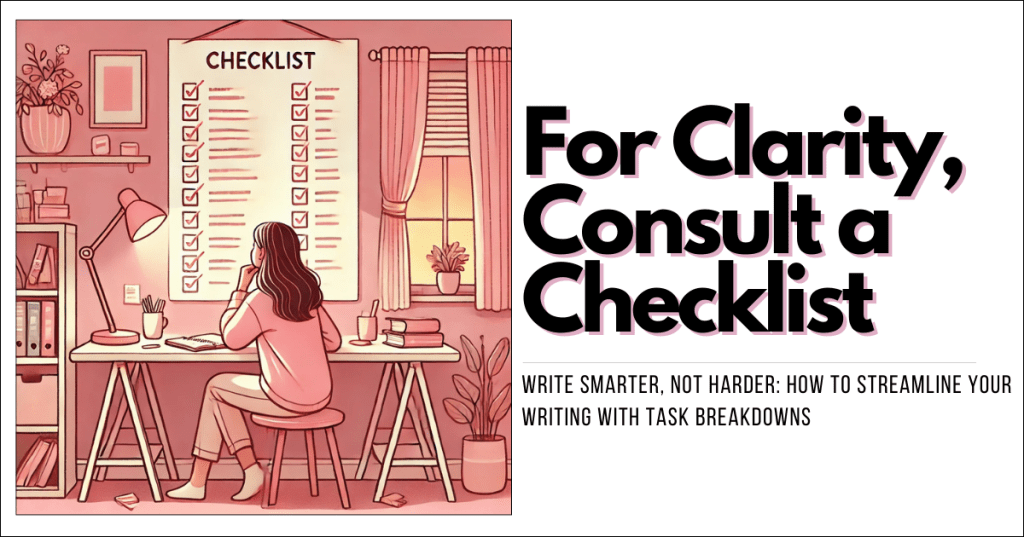

Writing a story can feel like juggling a hundred ideas at once—plot twists, character arcs, worldbuilding, and more. But what if you had a roadmap to guide you through every stage? That’s where the Writer’s Checklist come in.
It’s a list of writing session goals you can hit. If you’re a writer that likes to track progress by time instead of words (or you’re in the planning or editing phase of your writing…the bookends of writing a novel), but you’re having a hard time keeping track of everything that’s required, below is the answer to your prayers. It’s a list of goals you can set for each of your non-drafting writing sessions. (Or you can break it down even further to tackle each task over multiple sessions).
By dividing your planning & editing phases into manageable steps, you can conquer each with confidence and clarity. This guide offers a comprehensive checklist to help you navigate the bookend stages of your story—how to add kindling to your idea sparks and polishing your finished draft till it shines. Whether you’re a seasoned writer or just starting out, these tasks will keep your creativity flowing and your projects on track.
Freebie: Checklist on Notion
So that you can modify the list below while on the go! (Yeah, I really need to stop being such a dork. Maybe I should put it on the checklist.)
The Writer’s Process Unlocked:
Prewriting and Worldbuilding
- Plot Analysis:
- Identify gaps in your storyline.
- Create a cause-and-effect flow for key events.
- Worldbuilding Details:
- Flesh out political systems, cultures, and economies.
- Design physical settings (maps, locations, geography).
- Develop unique rules for magic, technology, or societal norms.
- Timeline Creation:
- Build a chronological timeline of major events in your story.
- Ensure consistency in dates, seasons, and character ages.
- Backstory Development:
- Write detailed backstories for your main characters.
- Explore historical events that influence the present story.
Character Development
- Character Arcs:
- Map each character’s emotional journey and growth.
- Identify key moments where characters evolve or change.
- Dialogue Workshop:
- Write placeholder conversations or refine dialogue for natural flow.
- Develop distinct speech patterns for each character.
- Relationship Mapping:
- Chart relationships between characters (allies, enemies, family).
- Add notes about how these relationships evolve over the story.
Scene and Chapter Work
- Scene Outlining:
- Break chapters into scenes, summarizing their purpose and conflict.
- Add notes for scene transitions and hooks.
- Conflict Review:
- Check each scene for stakes and tension.
- Ensure conflicts align with character goals and the overall plot.
- Scene Layers:
- Add sensory details (sight, sound, touch) to scenes.
- Incorporate subtext and symbolism to deepen the narrative.
Research and Fact-Checking
- Cultural Research:
- Dive into real-world customs, traditions, or historical periods to inspire your fictional world.
- Technical/Scientific Research:
- Verify details about professions, locations, or technologies relevant to your story.
- Continuity Check:
- Cross-check earlier drafts or notes for consistency in names, dates, or events.
Structural and Thematic Work
- Theme Mapping:
- Identify the central themes and ensure they’re reinforced throughout the story.
- Pacing Analysis:
- Chart slow vs. fast-paced scenes to balance the story flow.
- Foreshadowing and Callbacks:
- Add subtle hints or clues to future events.
- Reinforce earlier setups with satisfying payoffs.
Polishing and Refining
- Sentence-Level Edits:
- Improve flow and readability of your prose.
- Eliminate redundant words and tighten descriptions.
- Tone and Voice Consistency:
- Ensure narrative tone matches the intended mood of each scene.
- Align character voices with their personalities.
- Imagery and Metaphors:
- Add fresh imagery or refine existing descriptions for impact.
- Weave metaphors and symbolism into key scenes.
Testing and Feedback Prep
- Chapter Summaries:
- Write short summaries for each chapter to give beta readers a roadmap.
- Reader Questions:
- Develop questions for beta readers to focus their feedback on specific concerns.
- Read-Aloud Testing:
- Read scenes aloud to catch awkward phrasing or pacing issues.
Miscellaneous Tasks
- Create Story Playlists or Mood Boards:
- Develop tools to capture the story’s mood and inspire writing sessions.
- Draft Cover Blurbs or Synopses:
- Practice summarizing your story for potential pitches or promotional use.
- Review Writing Goals:
- Reflect on your progress and adjust milestones or deadlines as needed.
Other Constraints to Set Up
Limit Time Spent on Each Task
Use Focus To-Do or Toggl Track or the Forest app to track how much time you spend on each phase. It’ll allow you to see if you’re spending too long on one phase and you need to move on to another. Or if it has to be done then it has to be done, so feel free to carry on, but it’s just another way you can monitor your progress and that can help you to keep going.
Though sometimes you may get more insight by cycling between tasks. For example, ‘developing unique rules for magic, technology, or societal norms’ might just help you fill in the ‘gaps you identified in your storyline’ earlier on.
Use Milestones
Set milestones for each phase, such as “Complete character arcs outline by [date]” or “Create a cause-and-effect flow for key events by [date]”.
Celebrate Small Wins
Yes, this is a constraint. Do not move on until you’ve celebrated your successes. If you’ve ticked off one task, reward yourself. If you’ve hit a milestone, reward ya self, you hear me? You deserve it and it’s only going to fuel you to keep going to hit the next one so that you can—say it with me now—reward yourself.
Conclusion
Writing a story is a monumental task, but breaking it down can make it feel less daunting and more achievable. By focusing on one task at a time—whether it’s worldbuilding, refining dialogue, or analyzing pacing—you’ll stay organized and feel less frazzled throughout the journey.
Remember, the key to success isn’t just talent or inspiration; it’s having a system that works. Use this task checklist as a blueprint (or inspiration) to guide your writing process. It’s time to dive in and start creating!
What’s your favorite way to stay organized while writing? Take a look at your current project and identify which stage you’re in. What mini task do you want to take on next?
Mailing List
Sign up to stay in the loop when new articles on writing, productivity and self-development drop!

 Green Where You Water It
Leave a comment