


The usual writing advice is that if you need to research something, leave a note for yourself for later. But I guess I have two main worries from that:
- What if that the detail contradicts the storyline or creates a plot hole later and it all could have been avoided had I attended to the research now?
- What if the story ends up being more shallow, versus if I had researched it, I could have incorporated details throughout the story & have given it more texture.
How can these worries be assuaged?
Here are some things I could think of:
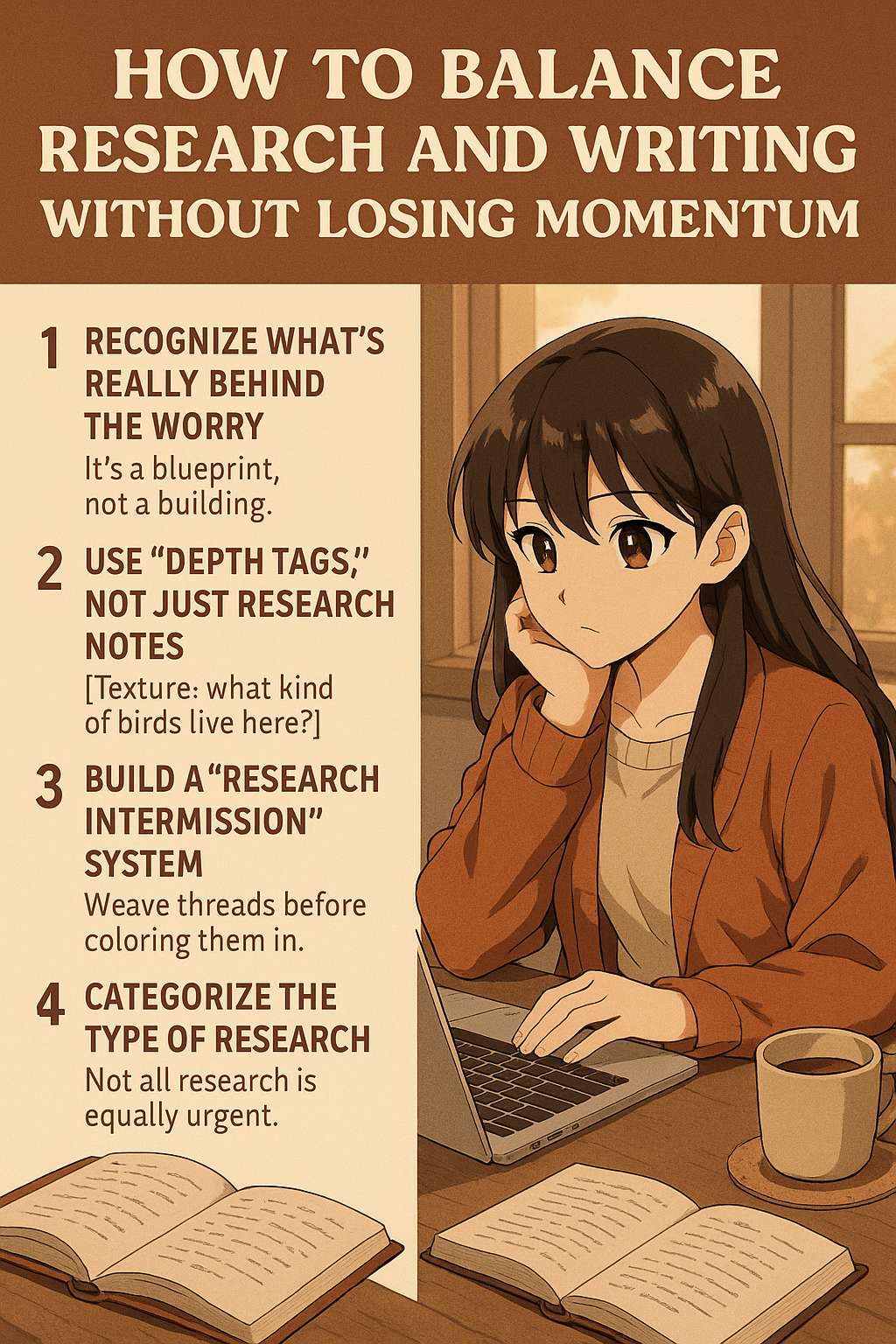
Categorize the Kind of Research Needed
Not all research is equal. Break it into layers:
| Type | When to Handle It | Example |
| Foundational (world logic, geography, core systems) | Before or early in draft | “How does this kind of magic/tech work?” |
| Texture/Atmosphere (sights, sounds, rituals, clothing) | After first draft | “What would the marketplace smell like?” |
| Verification (facts, plausibility, continuity) | Before draft or while drafting | “Would the planet’s gravity make that creature possible?” |
Good rule of thumb is: if everything else in your story depends on this, do it now. If it does not (i.e., it’s just to add texture), leave for later.
Build a “Research Intermission” System
Instead of stopping mid-scene to deep-dive, schedule mini-research breaks within your writing cycle.
For example:
- Write 3–4 sessions focusing purely on story flow.
- Then dedicate 1 shorter session (say, every Friday) to research integration.
That way, you maintain continuity but also get regular “depth infusion” points.
Or:
- Sessions to draft a chapter to its completion
- 1 session to dedicated to handling the research related points for that chapter
Specify Intent in Your Square Brackets
Instead of just writing [Research this later], make your placeholders more specific in intent.
For example:
[Texture research: what kind of birds live in this region? Maybe use migration as metaphor.][Logic check: confirm whether a power core can destabilize like this — physics vs. fantasy tension?][Atmosphere enrichment: how would dust sound in silence?]
This does two things:
- It preserves your creative question, not just the missing fact.
- It tells your future self why you cared about the detail, so you can weave it in organically later.
Remember That Texture Grows From Context
It’s actually easier to find meaningful details after the story exists.
When you know:
- What emotional tone dominates a scene
- Which relationships matter
- Where the story’s rhythm tightens or breathes
…then you can select targeted research details that amplify those moods.
Otherwise, early research may just add noise instead of resonance.
Create an “Incorporation Pass” After Draft One
Make one of your editing passes entirely for research-driven enrichment.
Checklist:
- Fill all
[research]placeholders. - Check for contradictions.
- Highlight any new insights that could ripple backward through earlier chapters.
This is where your story gains that texture you feared losing — but now it’s woven in with precision.
Bottom Line
You’re not shallow for deferring research — you’re strategic.
By tracking what feels missing without chasing it immediately, you’ll build a richer second draft that grows from emotional truth and factual grounding.
Join the Journey
If you enjoyed this post, join me for more. Subscribe below to get new articles on writing, creativity, and storytelling straight to your inbox.

 Green Where You Water It
Leave a comment