What Do You Imagine Your Writer Subconscious to Be?
Anne Lamott describes how a friend describes the subconscious: It’s a beautiful metaphor, but when I think of my subconscious I imagine something different. My Subconscious is The Star-Weaver in Her Observatory She lives in a high stone tower surrounded by night. Constellations scatter across her worktable. Ideas shimmer in the air like dust from…
My Writer Subconscious: The Star-Weaver in Her Observatory
Anne Lamott describes how a friend describes the subconscious:
“My friend Carpenter talks about the unconscious as the cellar where the little boy sits who creates the characters, and he hands them up to you through the cellar door. He might as well be cutting out paper dolls. He’s peaceful; he’s just playing. You can’t will yourself into being receptive to what the little boy has to offer, and you can’t buy a key that will let you into the cellar. You have to relax, and wool-gather…”
It’s a beautiful metaphor, but when I think of my subconscious I imagine something different.
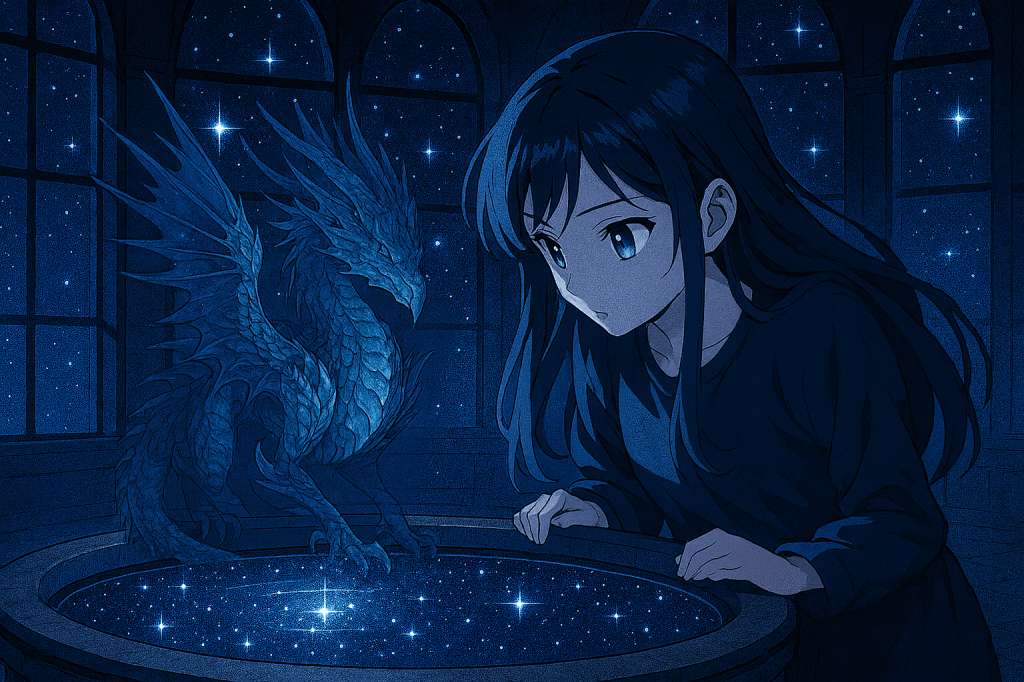
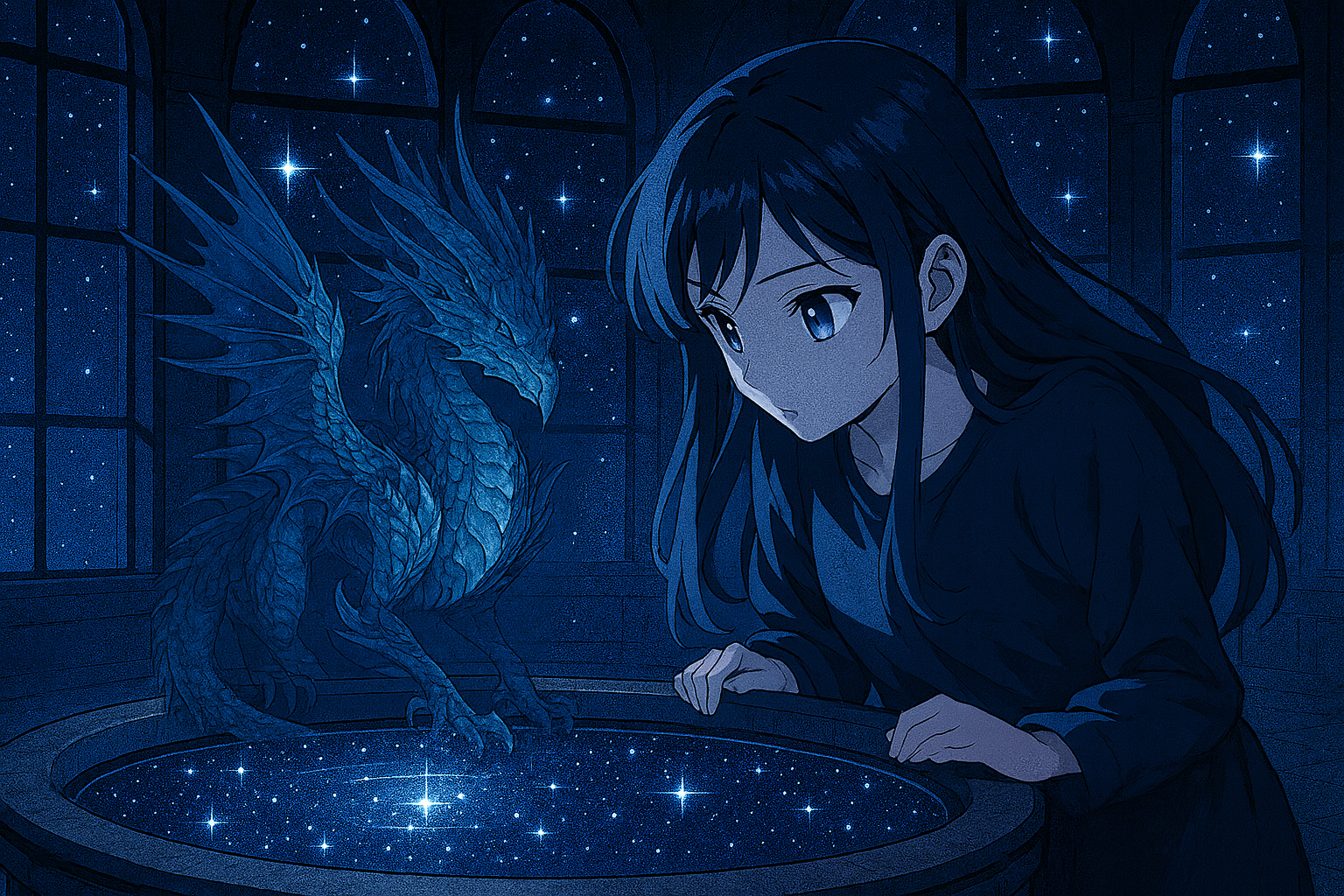
My Subconscious is The Star-Weaver in Her Observatory
She lives in a high stone tower surrounded by night. Constellations scatter across her worktable. Ideas shimmer in the air like dust from another world. She doesn’t immediately hand me anything, she watches me work for it. But at times, she guides my hand. She threads together scenes, emotions, memories, random sparks — constellations you only understand after they’re formed.
When you sit quietly, she aligns the stars. When you push, they scatter.
Sometimes she works slowly, allowing me to play, eventually aligning ideas with patient hands.
Other times she throws me through a tesseract, leaping across the story in a flash of insight that makes no sense until it suddenly makes perfect sense.
But she never forces anything and she never responds to force. The Star-Weaver offers her best work only when I stop trying to grip it.
And You Have One Too
Maybe your subconscious isn’t a Star-Weaver. Maybe it’s a cartographer drawing maps in candlelight, or a gardener collecting seeds, or a dragon scratching clues into stone.
But it is something. Try if you can to imagine what it could be.
Your writing changes drastically when you begin treating that inner figure as a partner. The writing takes on a depth, richness and momentum that feels almost effortless.
Most writers think the subconscious is an unreliable thing. But in truth, it’s the part of you doing the most consistent, devoted work—shaping the story long before you touch the page.
Learning to Work With Your Inner Maker
Your subconscious is the part of your brain that synthesizes, notices patterns, remembers stray details, and makes unexpected connections. It handles the complexity your conscious mind can’t juggle.
The Lantern Holder Conscious Mind:
Your conscious mind Lamott says, is merely the lantern-holder, the typist, the one who translates what the subconscious creates:
This is how it works for me: I sit down in the morning and reread the work I did the day before. And then I wool-gather, staring at the blank page or off into space. I imagine my characters, and let myself daydream about them. A movie begins to play in my head, with emotion pulsing underneath it, and I stare at it in a trancelike state, until words bounce around together and form a sentence. Then I do the menial work of getting it down on paper, because I’m the designated typist, and I’m also the person whose job it is to hold the lantern while the kid does the digging. What is the kid digging for? The stuff. Details and clues and images, invention, fresh ideas, an intuitive understanding of people. I tell you, the holder of the lantern doesn’t even know what the kid is digging for half the time—but she knows gold when she sees it.
But your subconscious only speaks when you give it space.
That’s why ‘wool-gathering’ works. That’s why quiet mornings or doing mundane chores or long walks or staring at nothing in particular works.
These aren’t lapses in productivity—they’re access points. This is how you invite your subconscious into the room.
An Invitation to Your Subconscious to Step Forward
Who is the being behind your work?
Close your eyes for a moment. Imagine the place where your ideas gather before you find them. Is it a cellar? A forest? A lighthouse? A moonlit desert? A bedroom from your childhood?
Who lives there?
Who hands you the thread, the clue, the spark?
You don’t have to force an answer. You just have to listen.
Give your subconscious enough quiet, space and patience, and it will show you exactly who it is—and how it wants to work with you.
I sometimes imagine that instead of a little kid, there’s a long-necked, good-natured Dr. Seuss character down there, grim with concentration and at the same time playing. He cranes his head toward the sound of the characters talking, but not like a court reporter, more like somebody sitting alone at an adjacent table, trying not to pry but wanting to take it all in. You may want to come up with an image or a metaphor for this other part of you that is separate from your rational, conscious mind, this other person with whom you can collaborate. This may help you feel less alone.
Because every writer has a Star-Weaver, or a child in the cellar, or some good-natured Dr. Seuss character, quietly stitching the story together beneath the surface. Imagine what becomes possible when you turn toward them.
The magic isn’t their existence. The magic is what happens when you finally meet them.
Subscribe
Welcome to my digital commonplace book. Sign up below to receive articles on all the things I found interesting this week. (I usually write about writing, productivity, self-evolution, with a sprinkle of personal finance here and there.)





 Green Where You Water It
Leave a comment