
On Writing Messy
- Lamott dismantles the myth that real writers produce polished prose on the first try, insisting that nearly all strong writing begins with messy, awkward, “shitty” first drafts. Instead of waiting for inspiration or clarity, she urges writers to let the “child’s draft” spill out freely—rambling, sentimental, overblown—because buried inside those chaotic pages may be the single paragraph that reveals what the piece is truly about.
- One thing I really liked was how she refers to the first draft as the “down draft” as in getting it down. I think I might even differentiate it from the “discovery draft”, because I would think of the “down draft” as purely getting everything you know and feel down. Discovery draft can be something a bit more active, like, what if I went down this path instead? Or what if the secondary character had his own story, what would that be like?
- She also gives us the visual of trapping the inner critics in a mason jar and turning down the volume on them.
- You often discover what matters only after you start scribbling. The lesson is simple and practical: write about something small and concrete, let it be messy, and trust that meaning will surface. You don’t know what’s usable until it’s on the page, but if you keep writing, something alive will appear—and that’s what you follow next.
- Lamott encourages us to think of our stories as polaroids. You don’t force meaning at the start; you stay with what moves you and let the piece clarify itself over time. If you’re patient enough to let the image develop, the story will tell you what it’s really about.
- Lamott explains that false starts are not failures but necessary steps toward truth. Like a painter repeatedly covering the canvas to discover what the image isn’t, writers often begin with confident assumptions about their characters or themes, only to realize they were mistaken.
- Good writing requires patience, humility, and the willingness to revise your understanding of the story.
On Characters
- Likable narrators matter most, she argues — not perfect ones, but flawed, funny, searching, self-aware ones who make us want to spend time in their company.
- Plot grows naturally from character rather than from a rigid outline imposed on them. If you truly understand what your characters care about—what’s at stake emotionally—then their actions, conflicts, and consequences will create tension on their own.
On Plotting
- She stresses that the story must feel like a vivid, continuous dream; readers should be compelled to keep turning pages without noticing the seams.
- Regarding the ending: aim toward a destination, but don’t grip it too tightly; if you stay faithful to your people, the story will eventually reveal where it was headed all along.
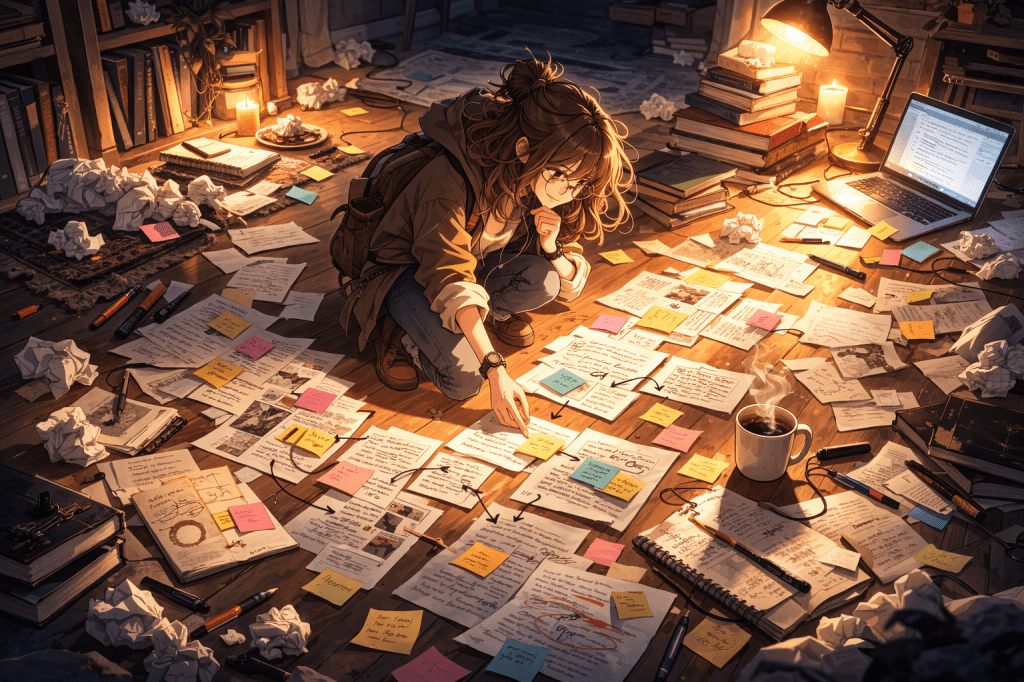
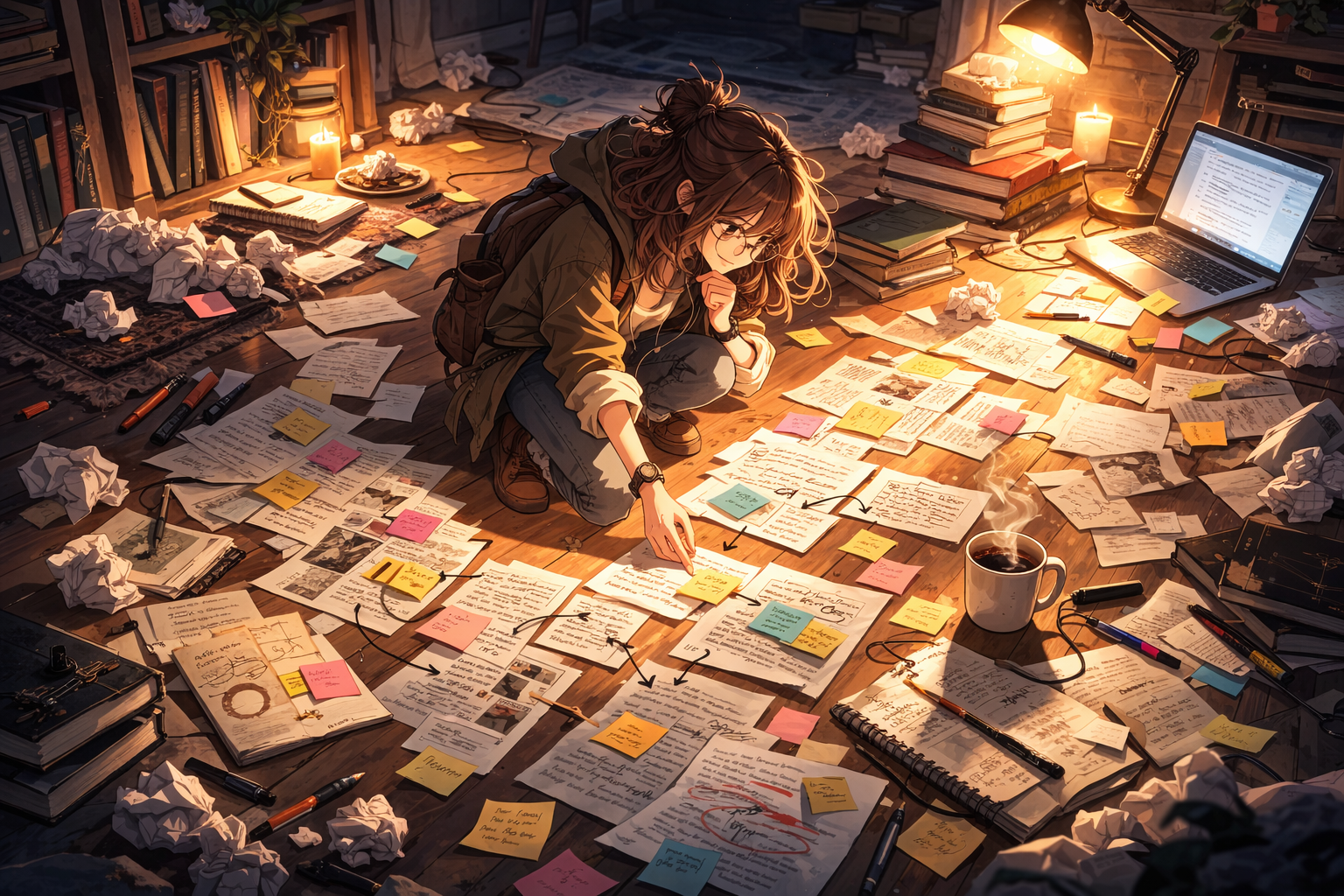
- She describes how her second novel collapsed under its own weight after years of work and a devastating rejection from her editor. Instead of quitting, she physically restructured the manuscript—laying pages across the floor, rearranging scenes, identifying missing stakes, and letting harder consequences fall on her characters. Even then, it still didn’t work. What finally saved the book was her impassioned defense of it: in explaining the story out loud, she discovered the real structure beneath the mess. Her editor asked for a plot treatment—a chapter-by-chapter roadmap of what the book was truly about and how each section moved from point A to point B. Writing that forty-page treatment clarified stakes, progression, and inevitability. With that blueprint, she rewrote the novel successfully. Sometimes you gotta say your story out loud to someone to reach the heart of it.
On Dialogue
- Writing strong dialogue requires developing an ear: reading lines aloud, listening closely to how real people speak, and then compressing and sharpening that speech so it feels truer than life without being literal transcription
- Each character must sound distinct, with rhythms and word choices that reveal background, personality, and desire.
- Ultimately, dialogue emerges from the unconscious “cellar” of the mind, and the writer’s job is to relax, listen, and keep typing—trusting that through messy drafts and revision, the voices will begin to sound like themselves.
On Settings
- Rooms and landscapes are not neutral backdrops; they reveal memory, values, class, wounds, pride, and longing. Every object, smell, light source, and crack in the wall tells us something about the people who live there.
- When a writer lacks firsthand experience—like Lamott with gardening—the solution isn’t to fake it but to research with curiosity: ask knowledgeable people, observe closely, read, listen, and borrow authentic details. As she did when designing a fictional garden by consulting a nursery worker, specificity creates believability.
- Imagine the scene so vividly that readers believe you’ve lived there.
On Revisions & Finishing
- She compares final revisions to putting an octopus to bed: just when you’ve tucked in most of the problems, another arm flails loose.
- How do you know you’re done? There’s no cinematic stretch-and-smile moment. Instead, you revise and prune and wrestle with it so many times that eventually something inside you says it’s time to stop.
- You address what you can, again and again, until you’ve resolved the major issues and simply have no steam left. When the work represents the best you can honestly do at this moment—and continuing would be driven by fear rather than improvement—that’s when you’re done.
Posts in Series:
- Book Notes: Bird by Bird – Part 1 – Short Assignments
- Book Notes: Bird by Bird — Part 2 — Trust the Mess (this post)




 Green Where You Water It
Leave a comment