
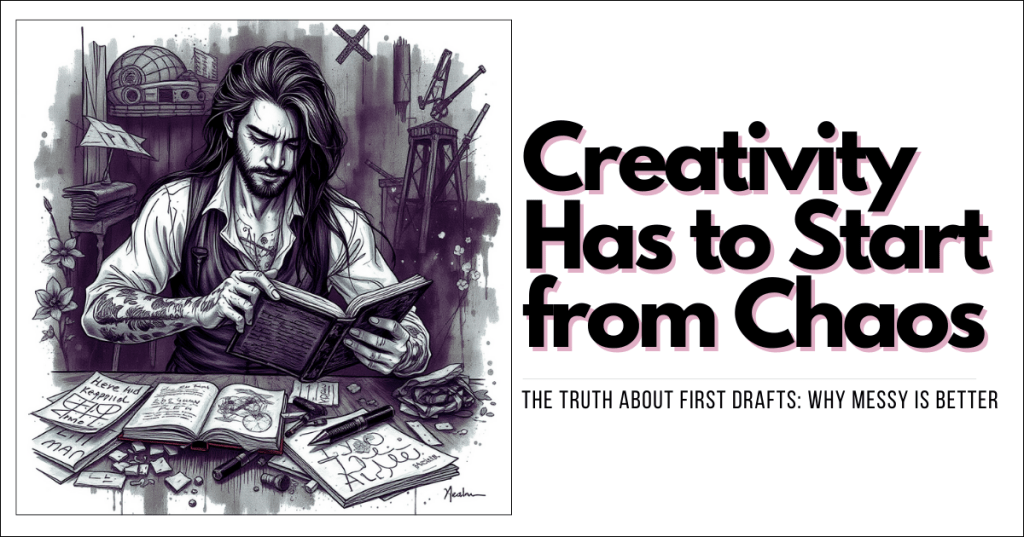
Before I start work on convincing you why you need to write a messy first draft, let’s start off by understanding why you might try not to.
Why the Hesitation?
- Fear of Imperfection: you feel that your first attempt must reflect your final vision (leading to paralysis and over-editing).
- Pressure to Perform: you hold yourself to high standards, expecting your work to be immediately “good”, stifling your creativity in the process
- Judgment Anxiety: you have this inexplicable fear that someone might read your messy first draft and judge it harshly. (Psst…nobody is going to see it if you don’t share it.)
- Difficulty Letting Go of Control: you may struggle with embracing unpredictability and feel like it would be a waste of time to go into a project without a plan. (Though as a plotter, I believe some planning is required, but not to the detriment of drafting or finishing your work.)
- Lack of Trust in the Process: you possibly haven’t yet experienced the revision stage yet and may overestimate how long it would take you to revise messy first drafts.
For the last two points above, the best way to counteract them is by starting with a skeleton of the plot or thinking of the major tentpoles (I use the 7-point plot method) to see if it’ll be a somewhat sturdy story. It’s ok if you have some of the parts missing for now, so long as you have some points figured out, you can start.
Why Writers Need to Write Messy First Drafts
Your first draft is just raw material that you need to build on. It doesn’t have to be perfect.
In fact, if you’re trying to write perfectly, then you should be writing messy. Imperfection is required in first drafts. That’s how writing works. First drafts are meant to be messy, that’s perfection. If your first draft isn’t messy, then you haven’t done it right. I’m sorry to say it, but you’re just going have to go back and make a mess of it. (Joking/not joking. If your writing is lacking soul, then not joking. Please go back and this time write it messy. If—on the other hand—it’s got its soul in place, then you don’t need this article, so please feel free to skip on ahead.)
Writing Messy is an Act of Exploration and Exploration Leads to Unexpected Connections
Perfectionism stifles creativity, whereas approaching your writing with a mindset to explore ideas encourages you to embrace uncertainty and make mistakes, which in turn opens you up to unexpected connections. Unexpected connections are the heart of creativity and we all want oodles of that.
Mistakes Can Lead to Breakthroughs
Mistakes should not be avoided at all costs. Run towards them with your arms wide open like you’re on the Titanic as it’s about to sink and you’re about to dive with it. Who knows what you’ll discover under the water?
Mistakes often lead to the exciting discoveries. Purposely making your draft messy allows you to take risks without fear—whether that’s playing with structure, pushing a character’s limits, or writing scenes that feel out of your comfort zone.
Sometimes, an accidental sentence or an unplanned character interaction can spark a new subplot or deepen the emotional stakes of your story. Maybe you initially wrote a character as a sidekick, but as the story unfolded the sidekick ended up being more compelling. (Merlin anyone?) Or perhaps you wrote a clunky passage that you later realized revealed a deeper theme in your story that you hadn’t considered before.
Mistakes are an invaluable part of the creative process. They push you to see new possibilities, challenge your original ideas, and ultimately lead to stronger, more innovative writing. If you’re too rigid from the start, you may never stumble upon these unexpected breakthroughs.
It Reduces Creative Pressure
You don’t have to produce something awe-inspiring and original if your only goal is to explore. Coincidentally though, when you open yourself up to just exploring, you tend to create awe-inspiring and original work. Heh. Imagine that. It’s like how you would catch a butterfly. You don’t run after it, you just have to stand really, really still and it might come to rest on your shoulder. Or how you’d lure a cat to pet it. You have to ignore it for it to come to you.
First drafts are where you coax creativity towards you by ignoring it and instead venturing forward to touch, taste and feel everything around your world. Go down the rabbit hole, even if it leads to a dead end (you can turn around and try another way). Explore every nook and cranny. You’ll find creativity following you around.
While you’re taking a look around and crafting your story, it’s important to note that the first draft is not about proving your skill as a master storyteller. Rather, it’s about discovering what’s possible. A messy first draft is a space for curiosity—to ask “what if?” without worrying about whether the answer is good enough.
Though as mentioned before, opening yourself up to all the possibilities without judgement or pressure to perform can actually help you develop your master storytelling abilities. 😉
By viewing your first draft as an exploratory exercise, you reduce creative pressure and make space for your best ideas to emerge—not because you forced them, but because you gave them room to grow bolder and come to you willingly.
Encourages You to Embrace Uncertainty Instead of Fearing It
Embracing uncertainty means trusting that even if you don’t know exactly where the story is headed (or if you’ve planned some of it, then sometimes not knowing where the story is heading), the act of writing itself will reveal the way forward.
If you’re aiming for a clean first draft, it cuts away any opportunity to explore. If you shoot for an exploratory messy first draft (which—as we’ve mentioned before—is the right way to first draft), then uncertainty is great. You want to head towards it because who knows what will happen and how it’ll all connect. And if you mess up, even better! Who knows how that mess is going to come in handy later. For example, when you’re trying to connect the dots on something else and you realize through that mess, you know how you’ll do it.
The act of exploring is being open to uncertainty because there’s an air of excitement laced with it. Breathe it in.
Writing Messy Captures Raw emotions and Creates an Authentic Experience
When you write messy, without worrying about what you’re putting down, chances are you’re writing truth as you see it. It allows you to discover your unique voice, maintain a connection with your initial vision and create a solid foundation for emotional layering later on during revisions.
The goal is to find the story hiding beneath the surface. Writing fast and messy allows your subconscious to take the lead, guiding you toward unexpected yet brilliant ideas.
It Allows You to Discover Your Unique Voice
A messy first draft gives you the freedom to experiment with tone, rhythm, and phrasing without worrying about perfection. When you allow yourself to write freely, you’ll notice patterns in your style: the types of words you gravitate toward, the cadence of your sentences, and how you naturally structure ideas. Your voice isn’t something you impose—it’s something you uncover. If you try too hard to be polished right away, you risk mimicking other writers instead of developing a voice that is truly yours.
By embracing the messy first draft, you give yourself space to let your authentic self emerge on the page. Over time, this becomes the foundation of your unique style, one that readers will recognize and connect with.
Helps You Connect to Your Initial Vision
When an idea first strikes, it often comes with a sense of excitement, emotion, and possibility. That initial spark is powerful, but it’s easy to lose sight of it if you get too caught up in editing early on. A messy first draft allows you to capture that raw inspiration before self-doubt or overthinking gets in the way.
By writing quickly and without restraint, you get closer to the essence of what you originally envisioned. Maybe it’s a particular scene that inspired you, a character’s voice that pulled you in, or a feeling you wanted to evoke. If you get bogged down in making everything sound perfect from the beginning, you risk diluting that original energy.
Once you have a full draft, even if it’s rough, you can shape it to bring your vision to life more clearly. But that first draft is your unfiltered connection to the heart of your story.
Creates a Foundation for Emotional Layering
Great writing is—above anything—about making readers feel something. But emotion doesn’t always emerge perfectly in the first draft. Instead, it comes in layers, built up over multiple passes.
The first draft acts as a foundation, allowing you to sketch out the emotional arcs of your characters without the pressure of getting every nuance right. Maybe you know your protagonist is supposed to feel deep guilt in a certain scene, but you haven’t fully explored why. Or perhaps there’s tension between two characters that needs more development. By getting the draft down first, you create space to refine these emotions in later revisions.
A messy draft also allows you to see where the emotional beats feel authentic and where they fall flat. Once you have that initial framework, you can go back and enhance those moments—adding subtext, refining dialogue, and deepening character reactions. Emotional depth doesn’t come from writing cautiously; it comes from allowing the story to unfold naturally first, then honing in on the details that make it resonate.
Writing Messy Allows You to Finish
A perfectly written, half-finished chapter is still just an unfinished chapter. Did you notice that the biggest difference between aspiring writers and published authors isn’t talent; it’s the ability to complete a draft? Writing messy helps you reach the finish line by shifting your focus from perfection to progress. Expecting perfection in a first draft is like expecting a painting to emerge fully formed on the first stroke of a brush. Or trying to jump before you can even walk. You have to learn crawl first, then walk, then run and then finally you can get that trampoline out and go to town on it.
Separates the Creator from the Editor
Trying to write and edit at the same time is like trying to build a house while simultaneously decorating the interior—it just doesn’t work.
Writing and editing require different mindsets and have to occur in the right order. Write first, edit later.
Walt Disney had 3 modes (or stages) in his creative process as follows:
- The Dreamer – where he dreamt up his ideas
- The Realist – where he made it happen
- The Critic – where he honed & polished what the Dreamer & Realist produced
When you’re drafting, you should be in creative mode (Dreamer), letting ideas flow without judgment. Organizing (the Realist) & editing (The Critic) comes later, when you’re in a better place to step back with a critical eye and refine your work. Trying to do both at once slows down the process and makes writing difficult than it needs to be.
It Helps You Push Through Difficult Sections
Messy writing prioritizes momentum over precision. Too often, writers get stuck rewriting the same opening paragraph over and over, never making any progress. By purposely writing badly at first, you can build momentum and finish your draft.
Not every part of a story flows easily—some scenes feel clunky, some transitions are awkward, and some moments just don’t feel “right” yet. If you try to perfect everything as you go, you may get stuck on these challenging sections and lose momentum. Writing messy allows you to push through rough patches without overthinking, trusting that you can refine or even rewrite them later. This keeps you moving toward the finish line rather than getting trapped in endless reworking.
If you’re worried about this being inefficient because now you’ve offloaded all the work to the editing phase, then consider this: finishing a first draft, no matter how messy, will give you more insights into your story. And those insights will allow you to edit better and more efficiently & effectively because now you know what works and what doesn’t. And what you don’t have to waste your time on fixing because you’re going to scrap it. (Another bonus: because you know you’re staying true to the story, you can uncover hidden themes and patterns that doesn’t feel fabricated. they can be amplified in later drafts to add depth to your story.)
It Keeps Writing Fun and Engaging
One of the biggest challenges writers face is burnout, often caused by the pressure to get everything right from the start. Writing stops being enjoyable and starts feeling like a chore.
What if, instead, writing was like entering into a dream world of your making? Writing a messy first draft is exactly like that. Making a mess allows you to embrace the joy of storytelling without overanalyzing every sentence.
Think of all the badly written stories out there that end up doing really well (I don’t want to name any names—coughFiftyShadescoughcough—you’ll just have to fill in the blanks). They do well because the writers enjoyed the process of writing them. Could they have used some heavy edits afterwards instead of being published as is? Perhaps, but that’s the kind of TLC you can worry about your story getting after you’ve written the messy first draft of it.
For now, throw paint against the wall. Go wild. Dive in with the Titanic. Write freely. Tap into the excitement that made you want to write in the first place. Follow the rabbit, let your characters surprise you, and explore your ideas without the weight of self-doubt or judgements.
That passion and playfulness is what will keep your project alive and make sure you get to the finish line.
Creativity is Born of Chaos
To produce a nuanced, original and creatively profound piece of work, you must first write it messy. It’s absolutely necessary. You’re allowed to lightly plan your course, but you must be open to detours and dead ends. You must look away from creativity to lure it in. And you must have the explorer’s mindset.
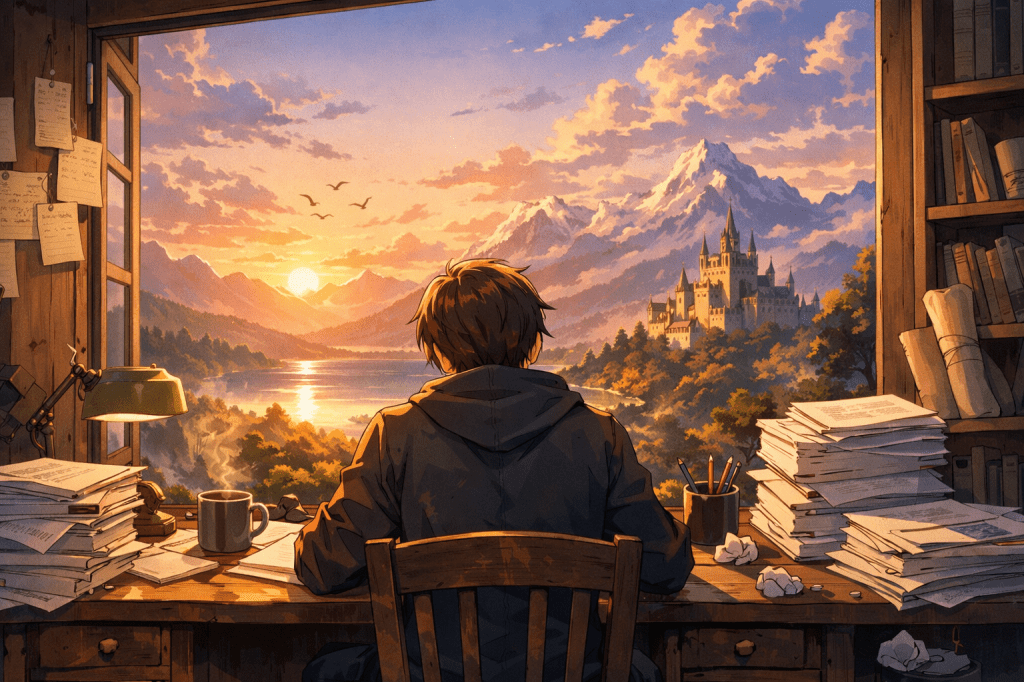
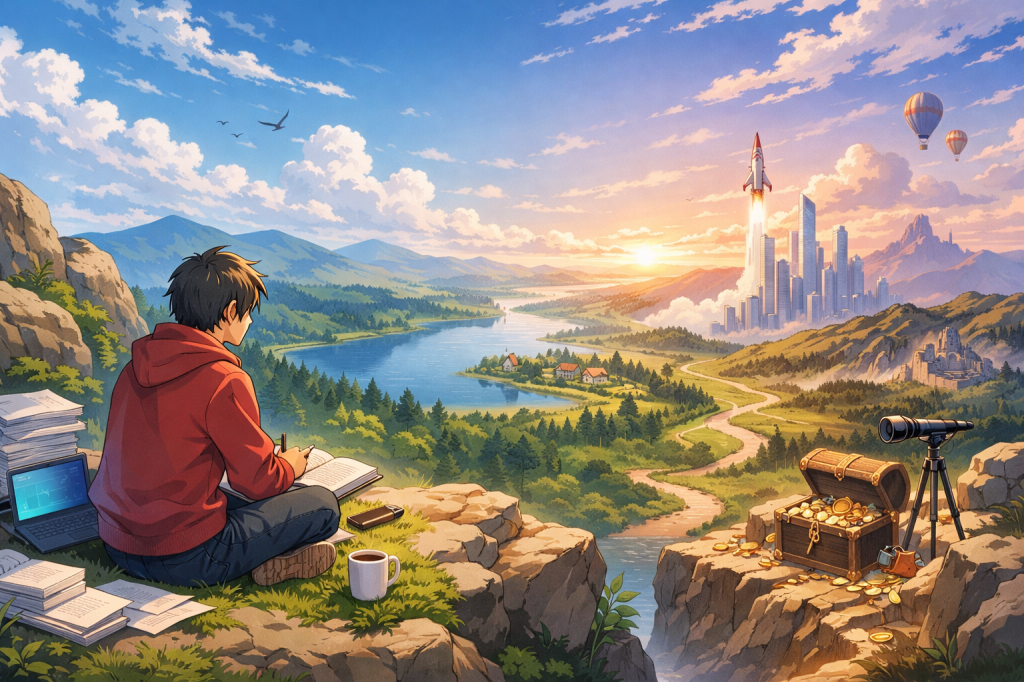
But most of all, you must dream. Dreams don’t make sense at first and that’s what makes them so potent. Everything starts from a dream. There’s something about our subconscious that makes the impossible seem possible and then moves us to make it so in this world. It us our job to be open to the possibilities, to explore and trust the process.
But the adventure won’t end there. Once you’ve made a mess, the time will then come for the magic of revision will take over.
To be continued.
Join the GWUWI.com Mailing List
I’m a full-time Treasury Analyst and part-time aspiring writer figuring out the craft of writing one step at a time. This is where I share what I learn. If you’re interested in writing and want to join in on the journey, feel free to sign up!




 Green Where You Water It
Leave a comment